How to find an ancestor in Quebec using their name and date of birth
Many people begin genealogical research starting with very simple information: a surname and a date of birth. This is often the case when a relative shares a family memory, when an old document is discovered, or when one simply wants to better understand their family history.
In Quebec, this approach is particularly interesting because historical archives are exceptionally well preserved there.

Thanks to parish registers, censuses, and notarial records, it is sometimes possible to trace an ancestor back several centuries. However, finding a specific person in the archives requires a methodical approach.
A name and a date can be a good starting point, but the person's identity must then be confirmed through several documents.
Start with what the family already knows
Before delving into databases and archives, it's always helpful to start with family memories. Parents, grandparents, or other family members may possess valuable information, sometimes passed down through generations.
It could be a memory of their home parish, an old photograph, or a document kept in a family album. A simple detail, like the name of a village or parish, can guide an entire search.
The following documents are often very useful:
birth or marriage certificates
death notice
old photos
religious booklets
family correspondence
This information makes it possible to place an ancestor in time and space, which then facilitates research in the archives.
Parish registers: a fundamental source
Quebec genealogy relies heavily on parish registers. From the very beginning of the French colony, priests meticulously recorded baptisms, marriages, and burials.
These records now constitute an exceptional historical source. They often allow us to trace several generations of the same family and sometimes contain very precise information.
A marriage certificate, for example, usually mentions the names of the spouses' parents. It may also indicate their parish of origin or even their region of origin in France.
Many registers can be consulted online thanks to the digitized collections of Bibliothèque et Archives nationales du Québec (BanQ).
Genealogical databases
With the digitization of archives, it is now much easier to find an ancestor from a few basic pieces of information.
Some databases allow you to search directly for a name in millions of historical records. Among the resources most used by researchers are:
These tools are often helpful in finding baptismal or marriage records. However, it is always advisable to check the original image of the document to confirm the information. It is also crucial to keep in mind that indexes may contain errors or spelling variations.
Censuses: understanding the structure of a family
Censuses are another very useful source for tracing an ancestor.
These documents were produced at different periods in Canadian history and allow us to know the composition of a household at a specific time.
You can find there:
the name of the head of the family
that of his wife
children
sometimes other family members living in the same house

Censuses sometimes also indicate people's ages, occupations, and places of birth. This information often makes it possible to confirm an individual's identity and to trace the evolution of a family over the years.
Notarial acts and judicial archives
When parish registers and censuses are insufficient, other documents can supplement the research.
Notarial acts , for example, are a veritable goldmine of information. They contain marriage contracts, wills, post-mortem inventories, and land sales.
These documents sometimes allow us to better understand the daily lives of our ancestors and their family relationships.
In some cases, it is even possible to find the land or property on which an ancestor settled by consulting the land registry archives.
The difficulties that one often encounters
Even with a name and date of birth, the search can sometimes become complicated.
Some regions had several families with the same name. Therefore, there may be several people with similar information.
Spelling variations also present a common challenge. In older documents, the same surname may be spelled differently depending on who wrote the document. Resources like these can be helpful in this regard.*


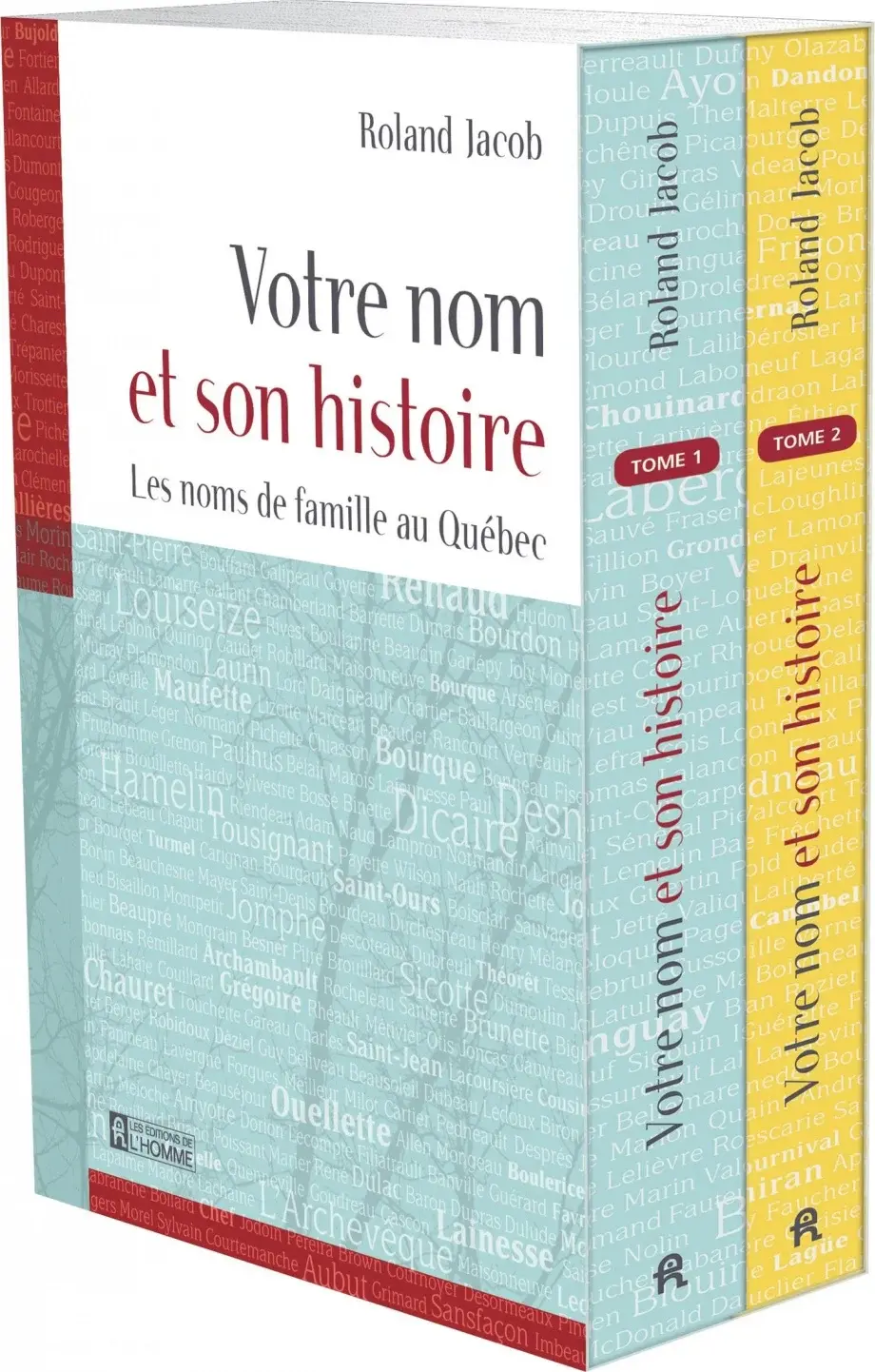
*These books are available in our professional library
Therefore, it is sometimes necessary to be patient and compare several documents to confirm a person's identity.
How far back can we go in the archives?
One of the fascinating aspects of Quebec genealogy is the depth of the available archives. Thanks to records preserved since the 17th century, it is often possible to trace a family's history back to the first settlers established in New France. In some cases, research even allows one to identify the parish or region of origin of ancestors in France.

Each discovery adds a piece to the puzzle and allows us to better understand the journey of the generations that preceded us.
When the help of a genealogist becomes useful
Some research can become particularly complex, especially when it comes to tracing ancestors who left few traces in the archives. This is often the case for earlier generations who lived in a time when civil records were less rigorous or nonexistent. Furthermore, migrations, name changes, and variations in name spelling can further complicate the research process. Records may also be incomplete or damaged, making the task even more difficult for amateur researchers attempting to reconstruct their family tree.

In these complex situations, the help of a professional can be invaluable. A genealogist possesses the necessary experience to navigate various documentary sources, whether parish registers, censuses, wills, or other historical documents. Thanks to their specialized training and in-depth knowledge of available resources, these experts are able to confirm family relationships and decipher information that might elude an untrained researcher. They can also use advanced techniques, such as DNA analysis, to establish connections between individuals and their ancestors, which can be crucial in cases where records are scarce.
To learn more about genealogical research services offered in Quebec, you can visit Genealogiste.ca . This website offers a variety of services tailored to the needs of researchers, whether beginners or experienced. In addition to personalized consultations, you will also find educational resources and tools that can help you better understand the genealogical research process. Feel free to explore these options to enrich your quest for identity and family heritage.
Conclusion
Finding an ancestor in Quebec using their name and date of birth is often possible thanks to the wealth of historical archives preserved in the province.
Parish registers, censuses and notarial archives allow us to gradually reconstruct the history of families and discover the journey of those who shaped our history.
Genealogy is first and foremost an exploration of the past. Every document found, every record discovered, helps to bring back to life the generations that came before us.
*Some links on this page are affiliate links. This means I may receive a commission if you make a purchase, at no extra cost to you.


Comments